Private Hernia Surgery in Southampton & Hampshire
As a Consultant General and Upper GI Surgeon, I specialise in the comprehensive assessment and treatment of all types of hernias. If you are searching for hernia surgery in Southampton, I offer specialist assessment and repair of groin and abdominal wall hernias using both minimally invasive (keyhole) and open techniques. Whether you require a routine repair or complex recurrent surgery, my goal is to provide you with a tailored, patient-centred approach using the latest methods.
What is a Hernia?
A hernia occurs when an internal part of the body pushes through a weakness in the muscle or surrounding tissue wall. Most hernias occur in the abdomen or groin area. While some hernias are painless, others can cause a noticeable bulge, aching, or sharp pain, especially when lifting, coughing, or straining. Left untreated, they generally do not get better on their own and may require surgical repair to prevent complications.
Symptoms of a hernia
Typical symptoms include:
a lump or bulge in the groin or abdomen
discomfort when coughing or lifting
aching or dragging sensation
pain during physical activity
If you notice these symptoms, assessment by a specialist hernia surgeon is recommended.
Every hernia is unique, and the right treatment depends on its location, size, and your individual lifestyle. Explore the specific conditions I treat:
-
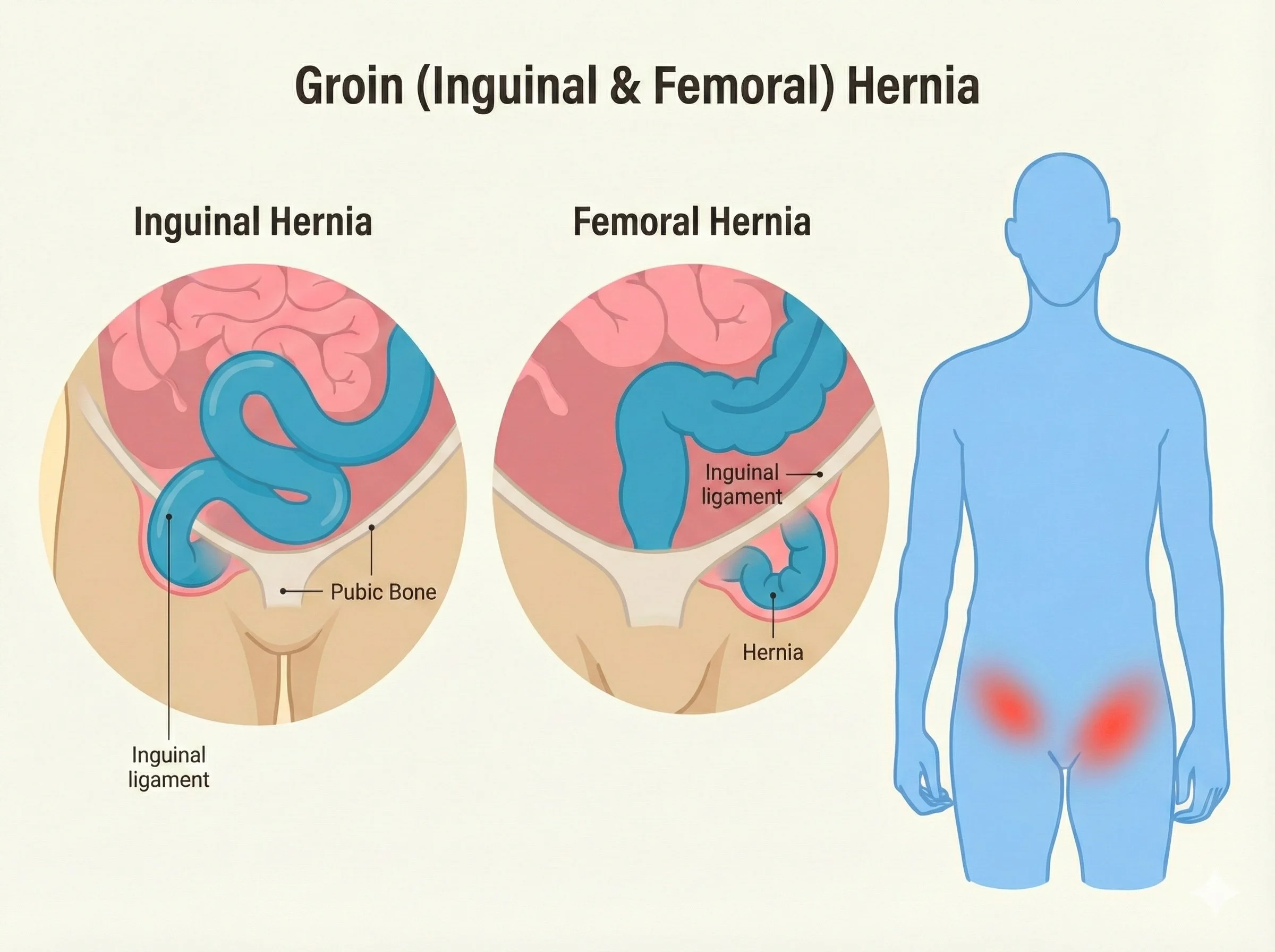
Inguinal and Femoral (Groin) Hernias.
These are the most common types of hernias, located in the groin crease or upper thigh. We offer both advanced laparoscopic (keyhole) and open repair options to ensure a rapid and comfortable recovery.
-
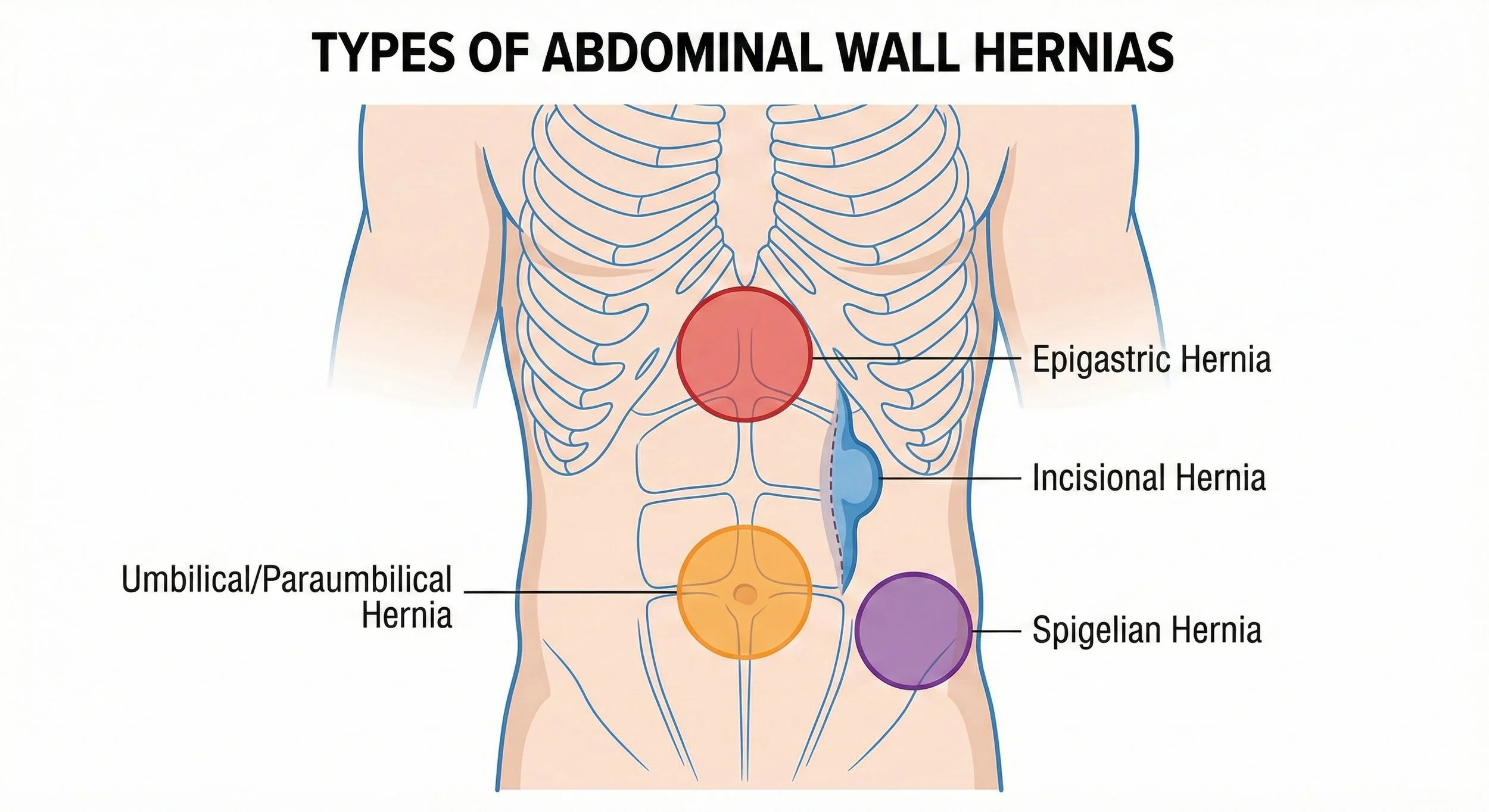
Abdominal Wall Hernias
This includes umbilical (belly button) hernias, epigastric hernias, and incisional hernias that occur at the site of a previous surgical scar.
-

Hernias in Women
Hernias in women can present differently than in men and are sometimes misdiagnosed. We provide a dedicated, expert approach to diagnosing and treating hernias specifically in female patients.
Making the right decision for you
Surgery is a collaborative process. I believe in "Shared Decision Making," meaning we will thoroughly discuss your symptoms, lifestyle, and surgical options to decide the best path forward together. If you aren't sure where to start, you can use our interactive tool to understand your symptoms.
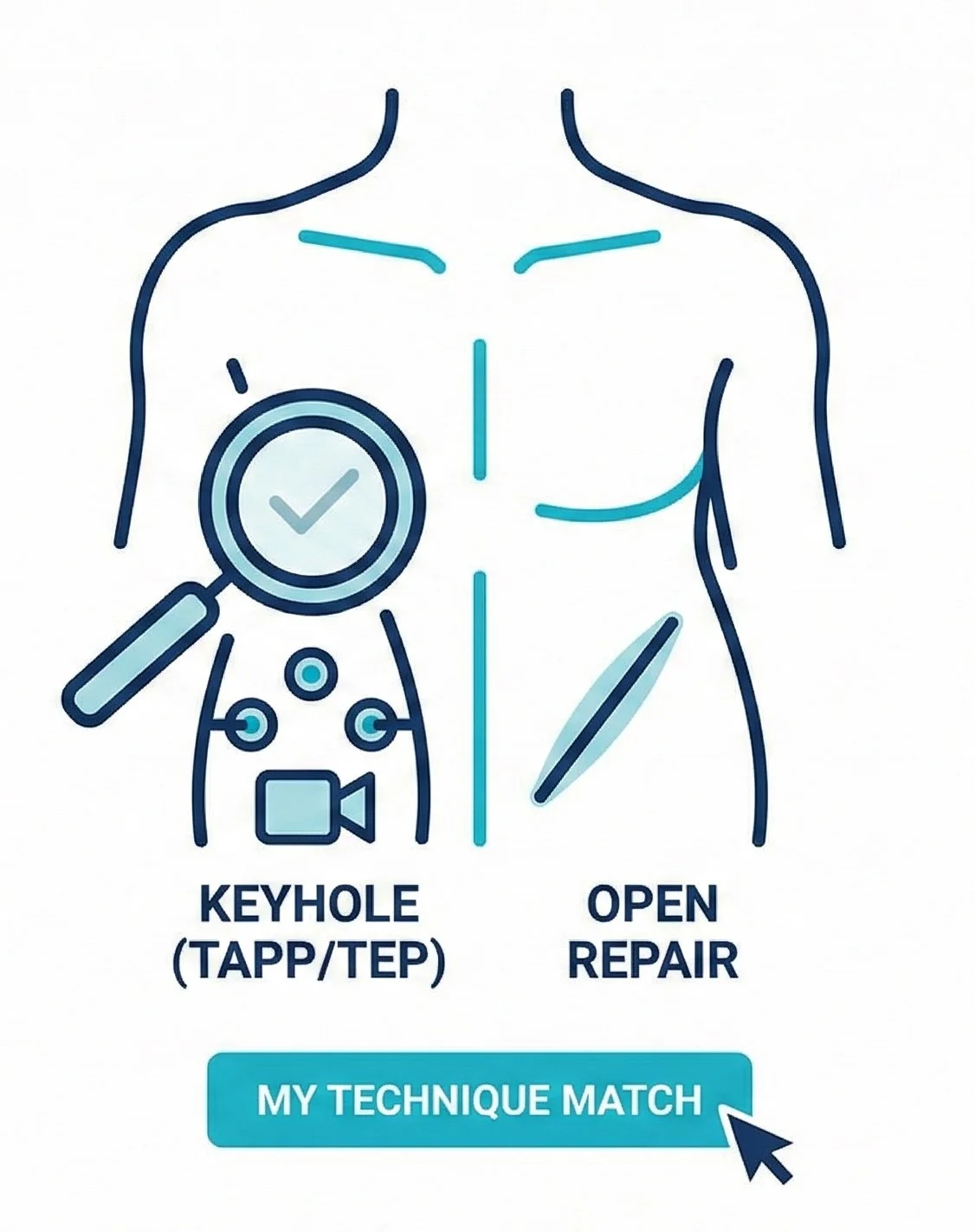
Your surgery journey - from first steps to recovery.
Modern surgical techniques mean that hernia repair is safer and more effective than ever, often performed as a daycase procedure. Understanding what to expect going into and after surgery is crucial for a smooth and successful return to your normal routine. Our easy to use personalised web tools will help you understand this in a way that is relevant to you.
Why Choose Mr Saqib Rahman for Hernia Surgery?
Consultant General & Upper GI Surgeon
Specialist interest in abdominal wall hernia repair
Expertise in laparoscopic and complex hernia surgery
Consultant at University Hospital Southampton
Focus on evidence-based surgical decision making
Private hernia surgery in Southampton: Fast access and transparent fees
I generally see patients within a week of referral and offer surgery, if needed, 2-3 weeks after that. This ensures you get back to your normal life as quickly as possible. I operate a fee-assured practice, so if insured you will not pay more than your policy dictates. I also see many self-paying patients, who will receive a no obligation all inclusive quote following their first consultation.
Hernia Surgery FAQs
-
No. Hernias that are small, asymptomatic, and easily reducible can be safely
observed in selected patients, particularly those with significant surgical risk
factors. However, most hernias enlarge over time and become symptomatic. Elective
repair is generally safer than emergency repair if a hernia becomes incarcerated
or strangulated. We use shared-decision-making tools based on the INCA trial to give you a personalised view of your options.
-
For laparoscopic repair, most patients return to desk-based work within 7–10 days and to driving within 1–2 weeks. Heavy lifting and strenuous exercise should be avoided for 4–6 weeks. Open repair recovery is typically 1–2 weeks longer. Full tissue healing and mesh integration continues for 3 months.
-
Yes, for the great majority of patients. Both laparoscopic and most open
hernia repairs are performed as day-case surgery at the Wessex Nuffield, with
discharge home the same afternoon. Overnight stay is occasionally needed for
patients with significant comorbidities or unusually complex repairs.
-
Both appear as a lump in the groin, but they pass through different anatomical defects. Inguinal hernias are far more common, particularly in men, and emerge above the line of the groin crease. Femoral hernias are less common, occur more frequently in women, sit lower and more medial, and have a higher risk of strangulation — which is why femoral hernias are usually recommended for repair even when symptoms are mild.
-
Most hernias enlarge gradually over months to years. The risks of leaving a hernia are progressive enlargement, increasing discomfort, and — less commonly but more seriously — incarceration (when the hernia contents become stuck) or strangulation (when the blood supply is compromised), both of which require emergency surgery. The lifetime risk of needing emergency surgery for an untreated groin hernia is approximately 0.2–2.9% per year.
-
Modern hernia mesh has an excellent safety record and is the standard of care for most repairs because it reduces recurrence rates substantially compared with sutured (non-mesh) repair.
The concerns reported in the media largely relate to specific older mesh products used in pelvic floor surgery, which are different to those used in hernia repair. The lightweight polypropylene meshes used in modern hernia surgery have been studied for over two decades.
-
Light activity and most daily tasks are safe. Heavy lifting, straining, and high-impact exercise can worsen a hernia and increase discomfort, and are best avoided. Activity does not cause a hernia to "strangulate" — the risk of that is independent of exertion — but it can accelerate enlargement. If your hernia is symptomatic with activity, that is itself an indication for assessment.
Fees & Insurance
I welcome both self-paying patients and those with private medical insurance. I am recognized by all major insurance providers, including Bupa, AXA, Aviva, Vitality, WPA, and Cigna.
Book Your Consultation
Ready to take the next step? Book a private consultation at the Nuffield Health Wessex Hospital to discuss your symptoms and get a personalized treatment plan.