
Private Inguinal Hernia Surgery Hampshire
Specialist keyhole and open hernia repair with Mr Saqib Rahman PhD FRCS
Same week clinic appointments offered, with surgery if needed usually within 2-3 weeks.
A groin hernia doesn't just hold your body back; it holds your life back. Most men don’t seek surgery the moment they notice a bulge—they wait. They stop lifting heavy boxes, they stop playing full-intensity sport, and they unconsciously change the way they pick up their children or grandchildren.
Most patients go home the same day after surgery and return to light activity within 1-2 weeks. Surgery is only recommended when clearly needed, with evidence guiding every decision.
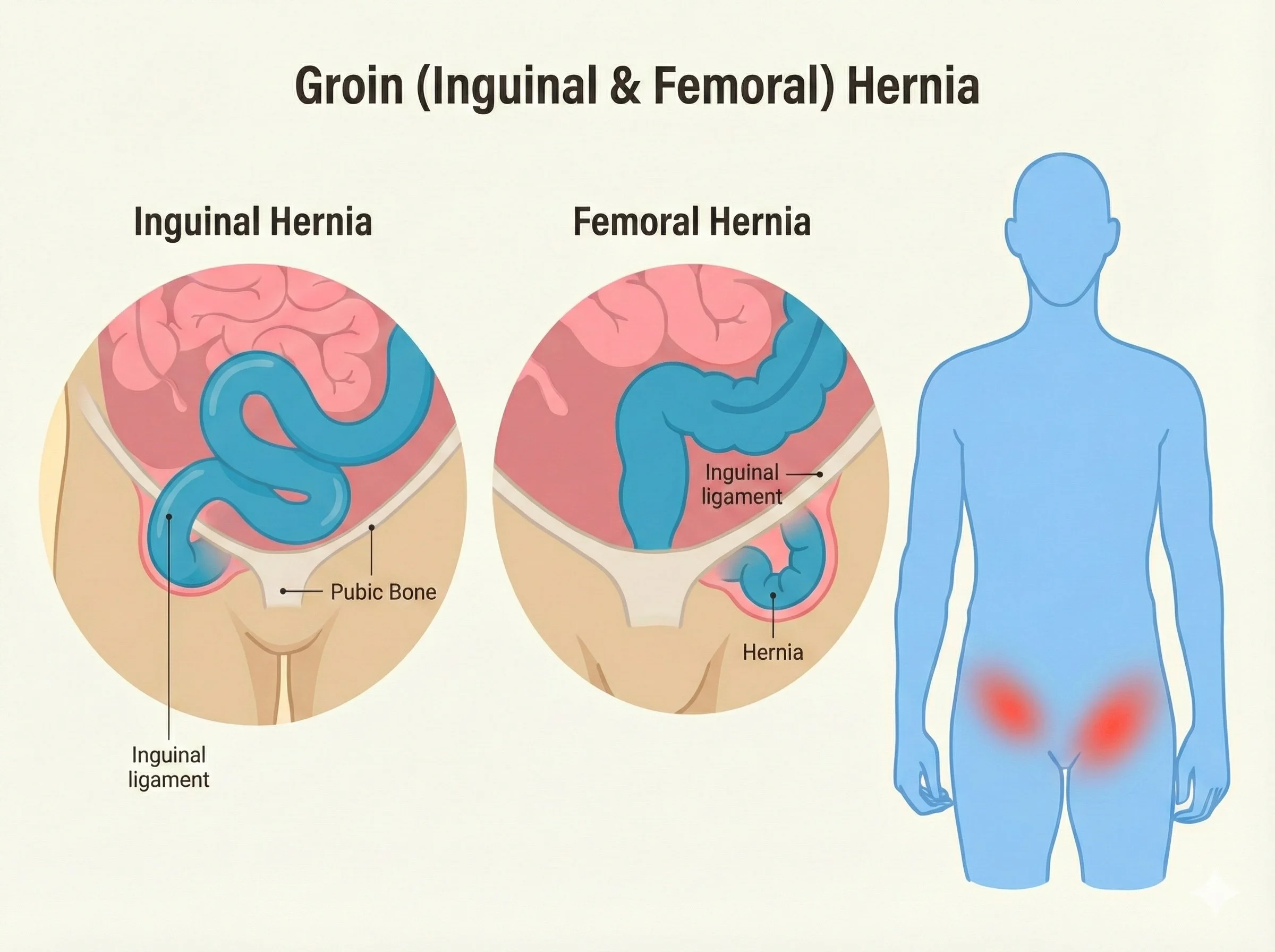
What is a groin hernia?
A hernia occurs when there is a weakness or hole in the abdominal wall muscle. This allows the inner lining of the abdomen and its contents (usually fat or bowel) to push through, creating a visible bulge.
Why do they form? Hernias are often caused by a combination of muscle weakness and strain. While heavy lifting can be a trigger, many hernias develop naturally over time due to aging or a congenital weakness that has been present since birth.
Inguinal vs. Femoral Not all groin lumps are the same. It is vital to distinguish between the two main types:
Inguinal Hernia: The most common type, occurring in the inguinal canal. It is far more common in men and presents as a bulge in the groin or scrotum.
Femoral Hernia: Occurs lower down, near the top of the thigh. These are more common in women and carry a much higher risk of strangulation (where the bowel becomes trapped). Because of this risk, we usually recommend fixing femoral hernias urgently, even if they are not painful.
Interactive Decision Suite
-
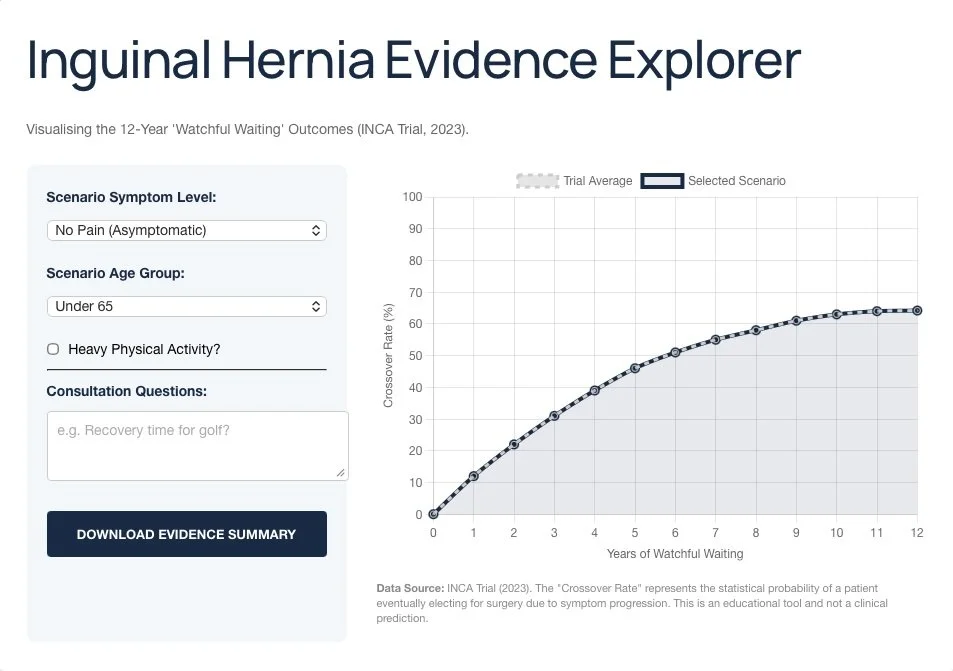
Is it safe to wait?
Use our interactive tool to visualise the 12-year outcomes of the landmark INCA Trial. See the likelihood of a hernia progressing from "no symptoms" to undergoing surgery.
-
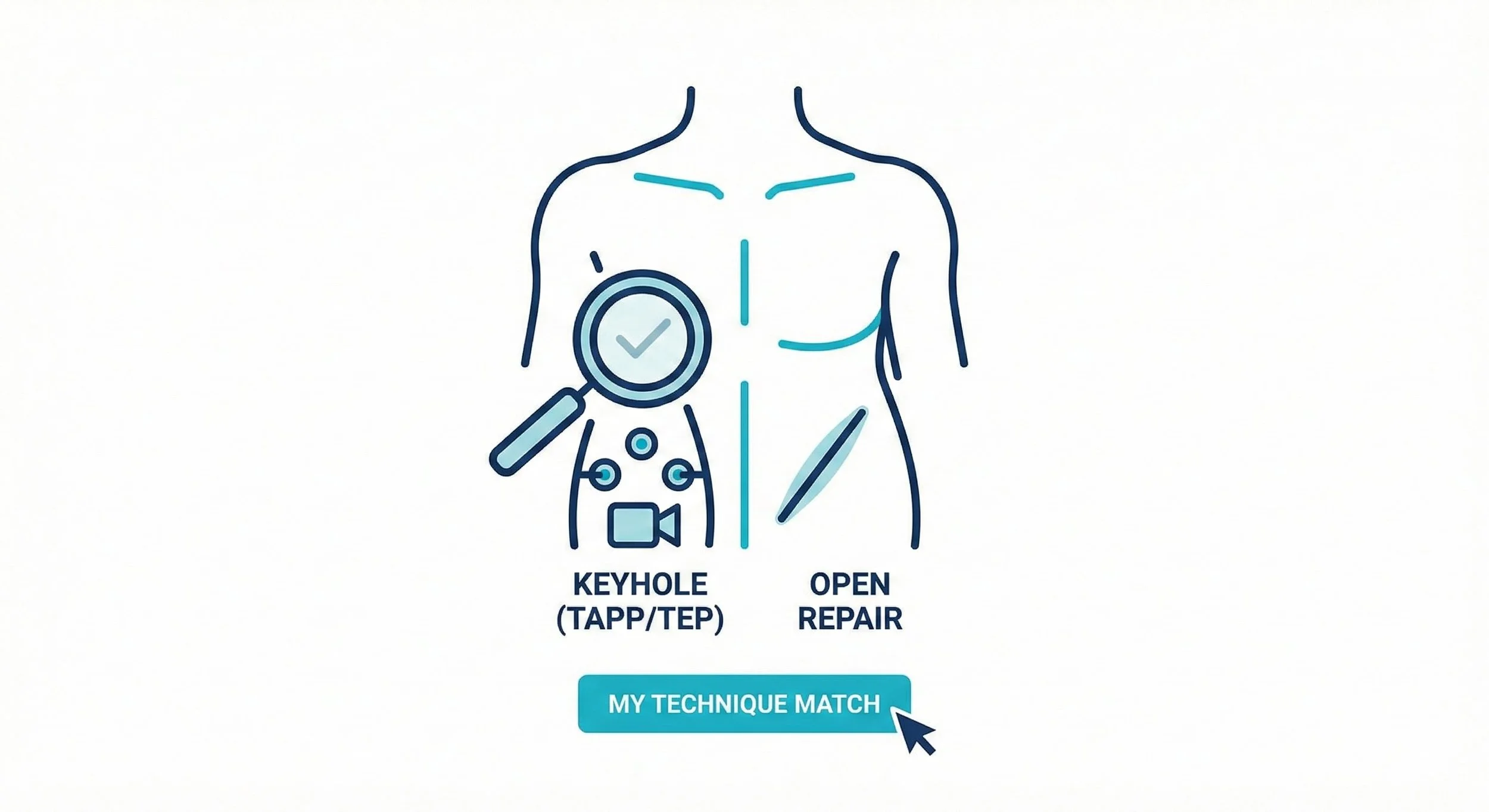
Keyhole or Open Repair?
Based on European Hernia Society (EHS) guidelines, see which surgical approach might fit your specific anatomy, medical history, and lifestyle goals
Surgical repair options
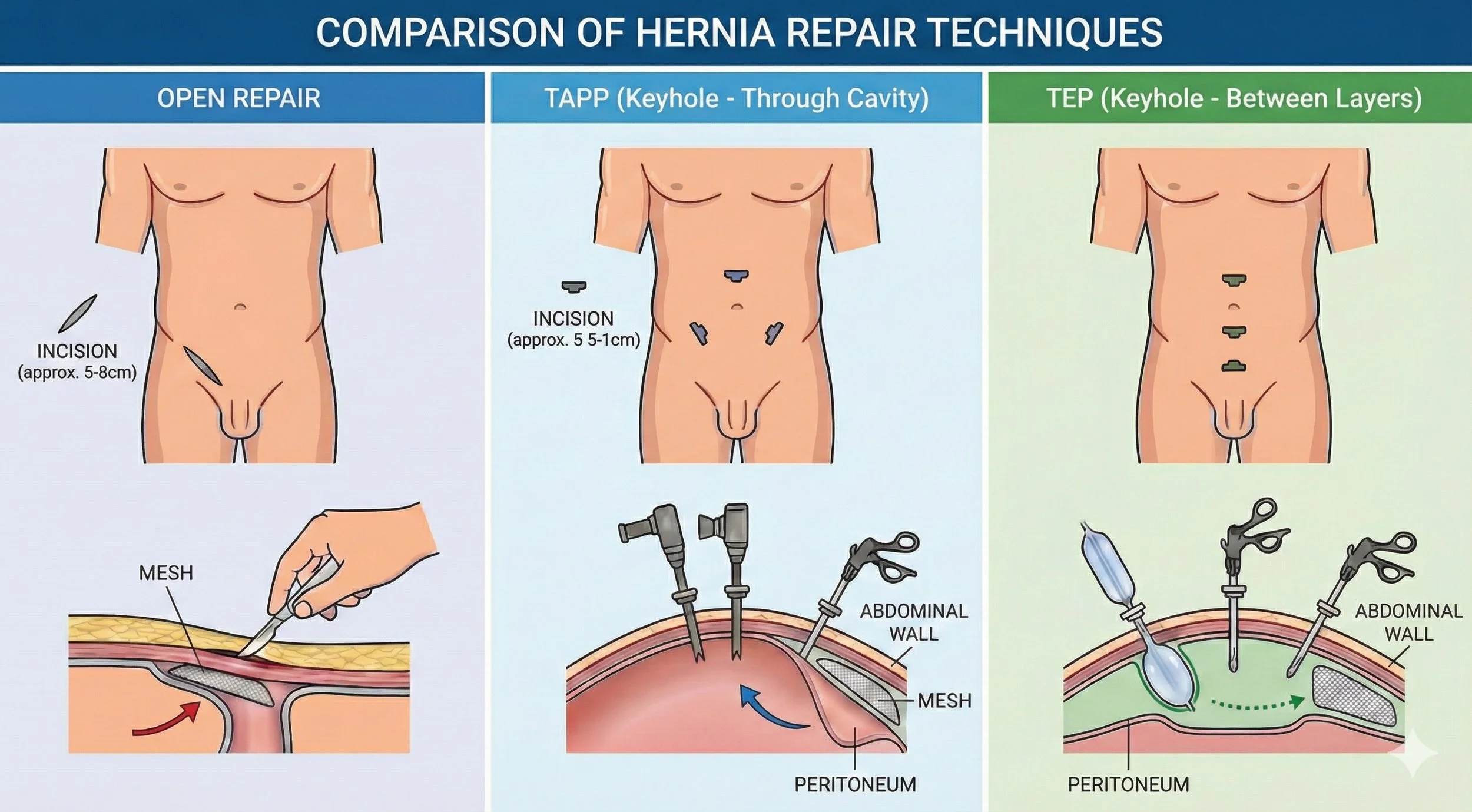
Tailoring the technique to the patient - TEP, TAPP or Open?
1. Laparoscopic (Keyhole) Repair For most groin hernias, I advocate for a minimally invasive approach, considered the gold standard. It involves placing a mesh behind the muscles to reinforce the weakness from the inside. I am proficient in both established laparoscopic techniques, performing them both routinely in my NHS practice and will select the one safest for your specific anatomy:
TEP (Totally Extra-Peritoneal): The gold standard for active patients. I operate entirely between the layers of the abdominal wall, never entering the abdominal cavity. This technically demanding approach minimises internal scarring and offers the fastest return to sport.
TAPP (Trans-Abdominal Pre-Peritoneal): In this approach, instruments are passed through the abdominal cavity to reach the hernia. This offers a wider view of the anatomy, making it the preferred choice for complex hernias, rare hernia subtypes, or situations where diagnostic inspection of the abdomen is required.
2. Open Repair (Lichtenstein) While keyhole surgery is suitable for most, Open Repair remains a safe and effective option. It is performed through a small incision in the groin and is often recommended for patients who cannot tolerate general anaesthesia, or for specific large or strangulated hernias.
The Evidence (Why Choose Keyhole?)
Reducing Risk and Speeding up Recovery
Surgical technique matters. Recent large-scale studies and international guidelines (HerniaSurge) favour laparoscopic repair for specific clear benefits:
Reduced Chronic Pain Risk: The groin is a complex network of nerves. Open surgery involves cutting through layers where these nerves sit, leading to a risk of long-term numbness or pain. Keyhole surgery places the mesh behind the nerves, significantly lowering the risk of chronic groin pain.
Faster Return to Activity: Because we avoid cutting the muscle, recovery is rapid. Most keyhole patients return to driving and light exercise within 1 week, compared to 2–4 weeks for open surgery.
Wound Complications: Smaller incisions mean a lower risk of wound infection and bruising.
Why Specialisation Counts: The Learning Curve
The importance of a High-Volume specialist
While laparoscopic (keyhole) repair offers superior recovery, it is technically demanding. National and international guidelines consistently emphasize that these benefits are only consistently achieved by surgeons who perform high volumes of the procedure. As a specialist performing these repairs weekly, I can offer you the full benefits of minimally invasive surgery with the lowest possible risk profile.
Preparation & Safety
Your Safety is Our Primary Outcome
We use a "Pre-hab" approach to ensure your body is optimized for the best possible healing.
The Smoking Window: We require a 4-week cessation period to protect your mesh from infection.
Weight Management: We provide guidance for patients with a BMI >35 to ensure keyhole surgery is as safe as possible.
Recovery Timeline
Keyhole repair is designed for speed, but tissue healing takes time. Here is what to expect.
-
Status: Day Case. You will go home the same day.
Goal: Mobilise immediately. Walk to the bathroom and kitchen.
Sensation: You will feel a general ache and some bloating (from the gas used during surgery).
-
Status: resting at home.
Sensation: This is usually the sorest period. You may notice significant bruising in the groin or scrotum—this is normal gravity-dependent bruising.
Action: Take regular painkillers. Keep walking around the house to prevent stiffness.
-
Status: Returning to light activity.
Milestone: Driving. You can usually drive once you can perform an emergency stop without pain (stamping your foot on the brake).
Work: Desk-based workers often return now.
-
Status: active recovery.
Action: You can resume light jogging, swimming, and cycling.
Note: You may feel occasional sharp twinges or "tugging" sensations as the mesh settles and scar tissue forms. This is normal nerve settling.
-
Status: unrestricted.
Milestone: Heavy lifting and gym work can resume. The repair is now structurally solid.